Orange alert as haze in Male’ area worsens to dangerous levels
Updated: November 6, 2026 at 07:47 PM
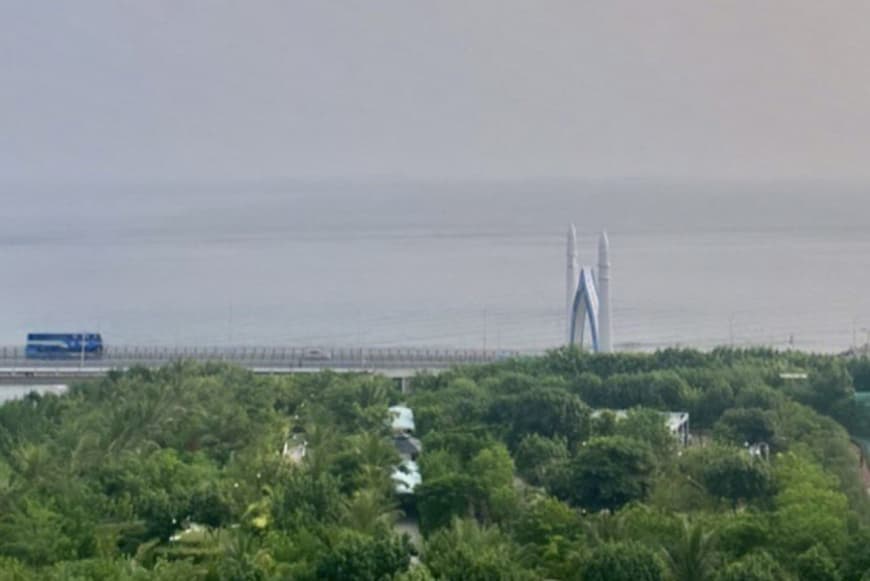
Health Protection Agency (HPA) has issued an orange alert warning of health risks as the haze blanketing Male’ area worsens to a dangerous level.
According to theIQ Air, the Male’ currently has an Air Quality Index (AQI) of 119, which falls into the “unhealthy for sensitive groups” category, color-coded orange.
According to information available from IQ Air, the fine particulate matter (PM2.5) is at 42.9 micrograms per cubic meter – which is eight times the World Health Organization annual PM2.5 guideline value.
This means the air pollution poses health risks for sensitive individuals like children, older adults, and people with heart or lung conditions.
HPA has advised to reduce outdoor exercise, keeping windows closed to prevent polluted air from entering, wearing a mask outdoors if you are in a sensitive group who are urged limit prolonged outdoor exertion, and using an air purifier.
Meanwhile, Vilimale’ currently has an AQI of 155, which falls into “unhealthy” category, color-coded red. The PM2.5 is at 61 micrograms per cubic meter – which is 12.2 times the World Health Organization annual PM2.5 guideline value.
This means air pollution poses risks to everyone in general, particularly for sensitive groups.
HPA has advised avoiding outdoor exercise, keeping windows closed to prevent polluted air from entering, wearing a mask when outdoors, and running an air purifier.
Everyone should avoid outdoors unless necessary, and wear masks if required to go outdoors.
Maldives Meteorological Service on Thursday reported that the haze blanketing Maldives is expected to carry on into next week.
Unlike mist or fog, haze is caused by fine particles in the air, which pollute the air and reduce visibility.
The Maldives usually faces haze during December and January, when the Hulhangu Monsoon transitions into Iruvai Monsoon.
Environmental analysts have warned that the issue has become more severe in recent years, mainly due to hazardous gases expelled from factories in neighboring countries.

FrontPage Editorial
FrontPage Editorial Team